Signal Cycles: A Portland Story
In the fall of 2007, I started a bike company in a small garage in North Portland. This is how Signal Cycles started, what it became, and how it ended.
The Setup
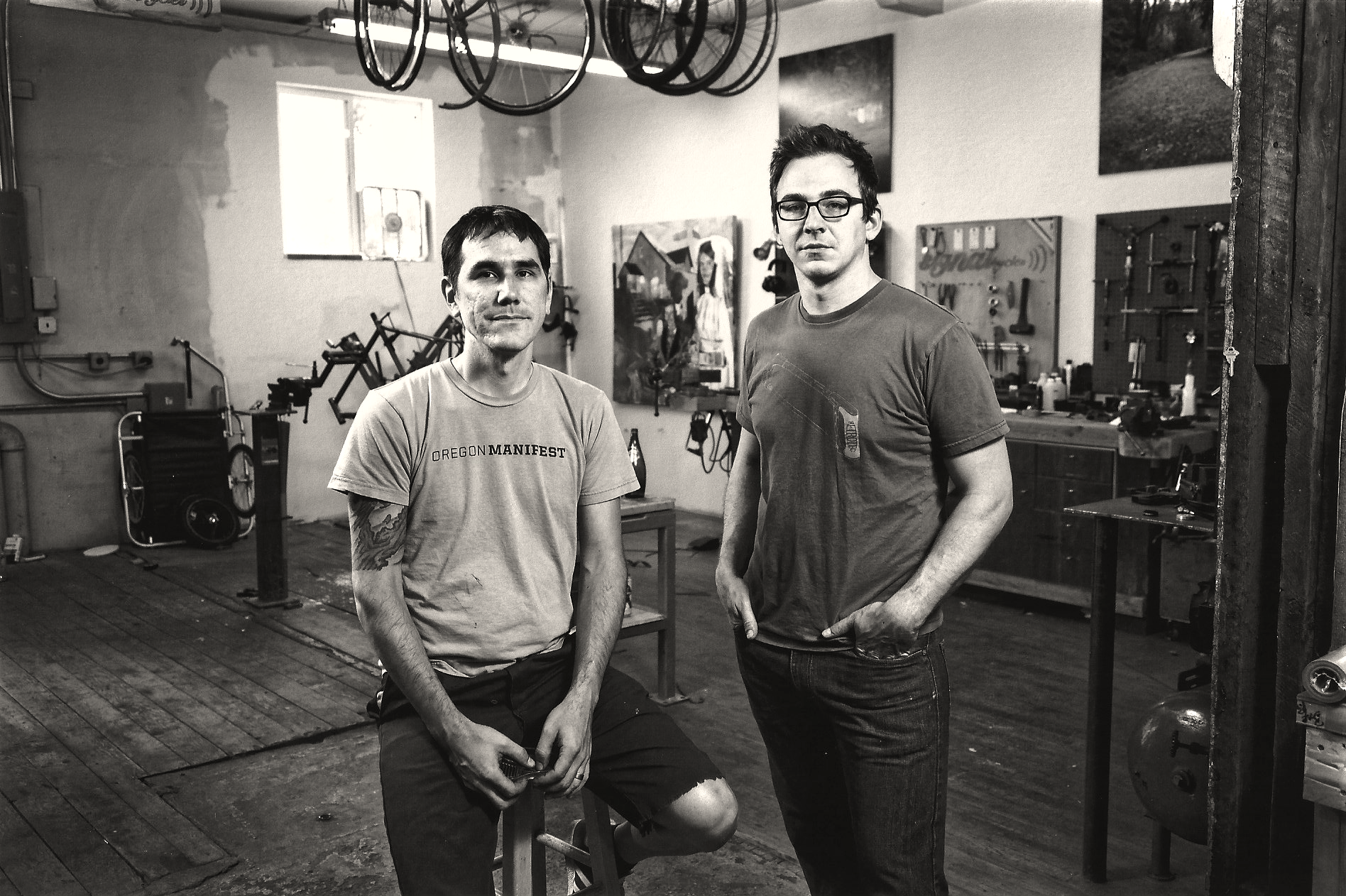
Nate Meschke arrived at Bike Gallery, having just moved to Portland from Nebraska with his wife Emily. He had bike shop experience and, as I’d eventually find out, a fine art degree in painting. So did I. That overlap of bikes and art gave us plenty to talk about as we overhauled customer bikes.
Around that time I was doing light work for Sacha White at Vanilla Bicycles. Nothing formal. Packing completed frames, shipping them out, building some wheels and watching a builder at the top of his craft run a company he clearly loved. I have a vision of him busy at his workbench, singing a Journey song and thinking: that’s what it looks like to love what you do for a living.
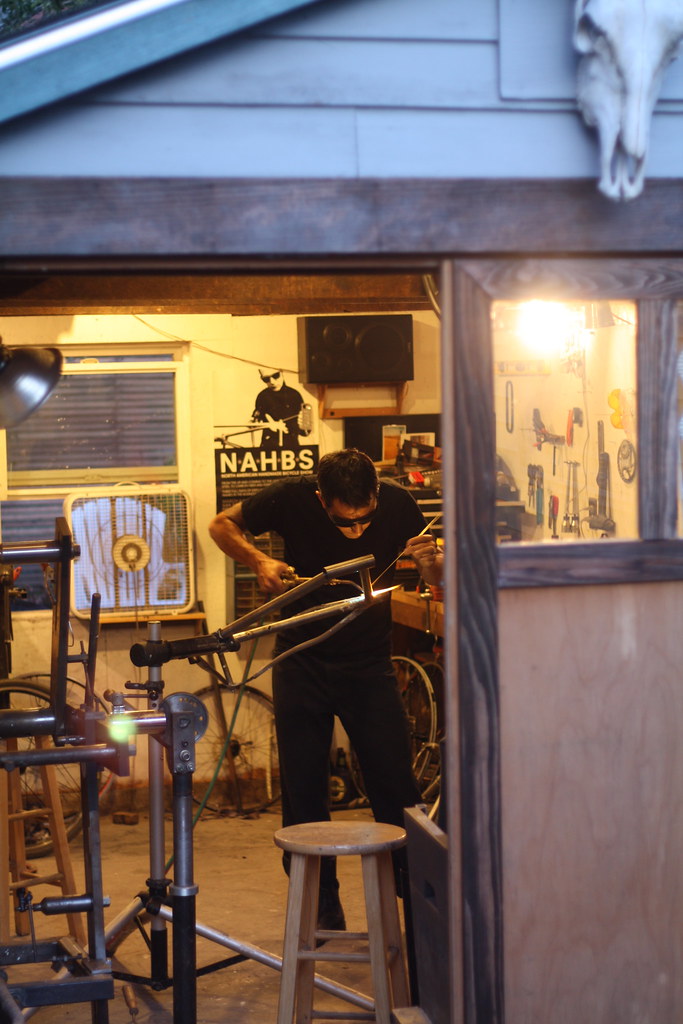
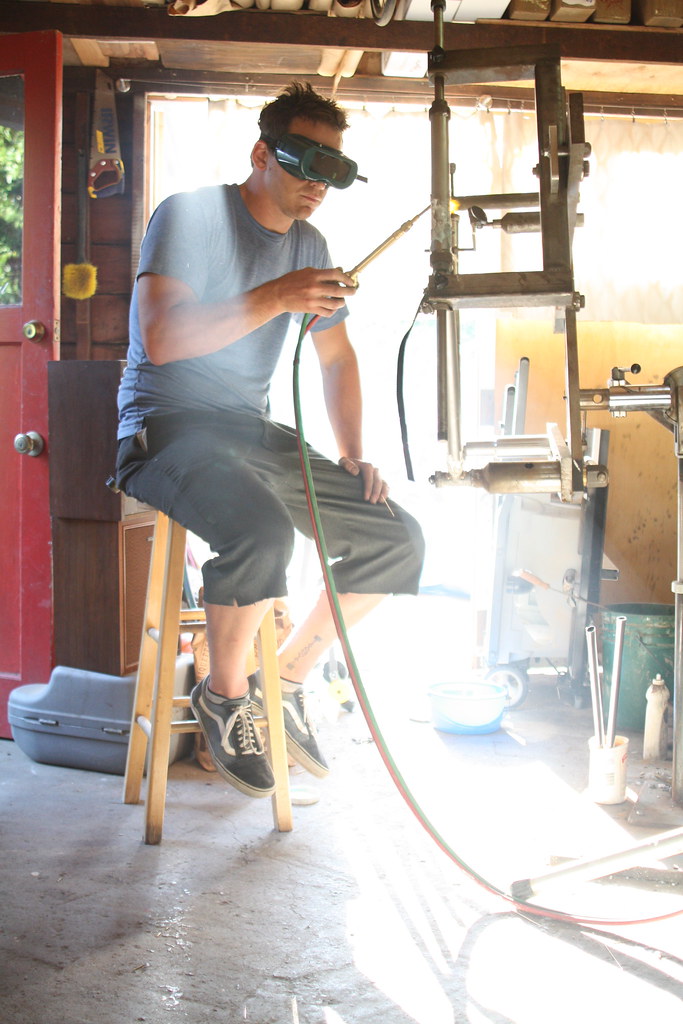
That example was inspiring. I started doing small fabrication work, adding dropouts to an old frame, making a front rack, adding braze-ons where they were needed. Then I bought a tube set. I built a singlespeed cyclocross bike for a friend. There is some unexplainable magic that happens when raw materials are joined into a usable machine. Swinging my leg over that first bike and pedaling it away, I felt like a wizard. Nate built a mountain bike for himself and we were both hooked.
A perfect storm
In early 2007 I attended the North American Handmade Bicycle Show in San Jose. It was only the third year of the show and the momentum behind handmade bikes was growing. I got to see builders I admired: Richard Sachs, the Sycip brothers, Curtis Inglis , Tom Ritchey showing a fillet-brazed road bike that was decades old and somehow completely modern. I was also there at the request of Joel Grover, the Bike Gallery’s main buyer, who asked me to keep my eyes open for builders who might be a good fit for the shop’s showroom.
At the end of the show they announced that the following year’s NAHBS would be held in Portland, Oregon.
I thought: maybe I should start a bike company…
Getting Off the Ground
Nate was in and we approached Jay Graves, the owner of Bike Gallery, about funding a startup. Jay was measured. Joel, on the other hand, was very excited and sold Jay on the idea. The agreement: Bike Gallery would fund the launch and pay for the first four bikes, Signal would operate as a custom bike option for Bike Gallery customers, and Nate and I would have full creative control over the brand and the bikes.
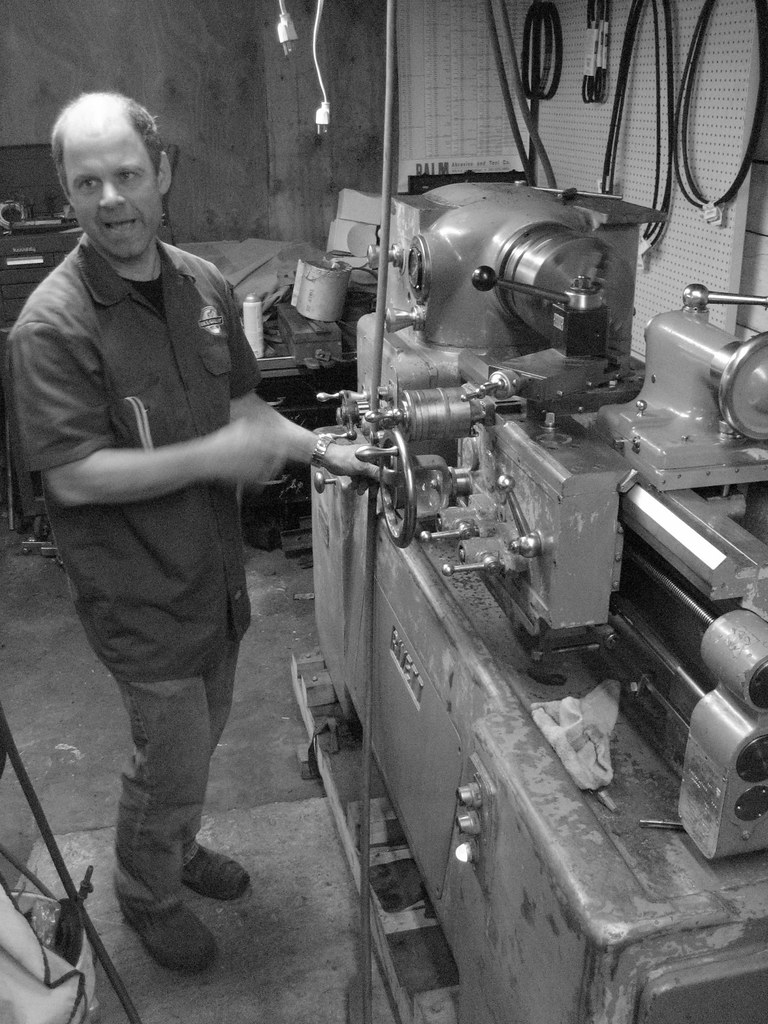
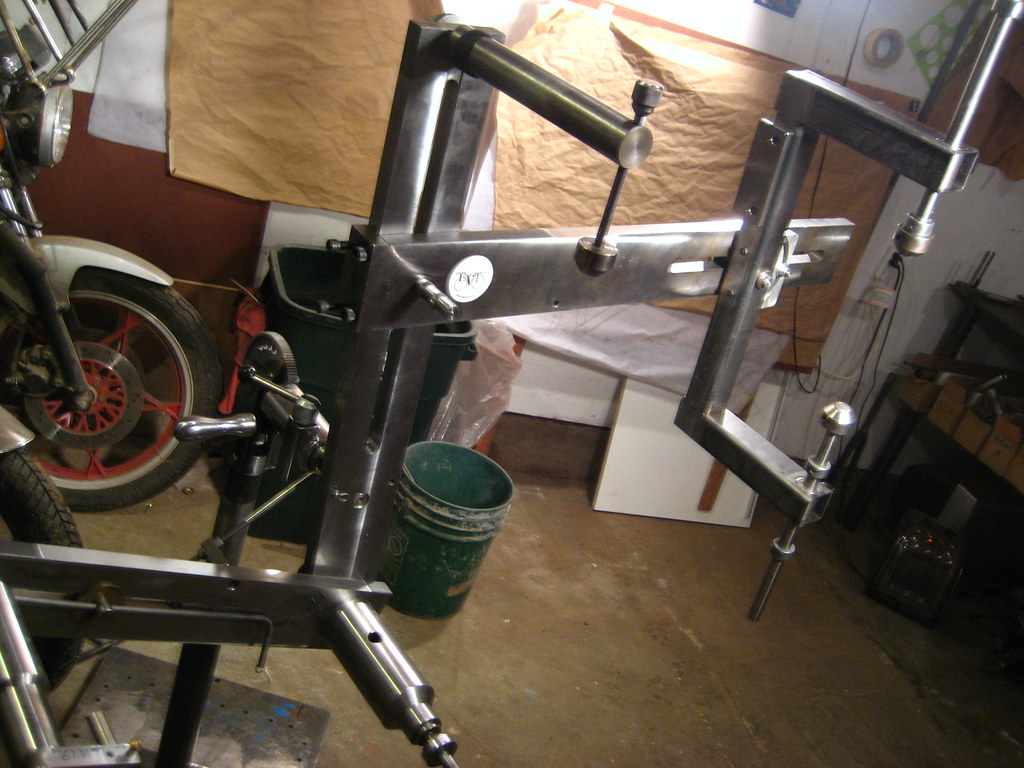
Without Joel’s optimism I don’t think we would have had the same trajectory. Another person that was key to getting us off the ground was Brett Flemming. Brett was a machinist, owner of Efficient Velo Tools, and head of Bike Gallery’s service department. Brett was a ball of energy and had already built us a complete frame jig from scratch when we started our first few frame projects. He was a constant resource for tooling and supplies and knowledge as we stumbled through the technical realities of frame building. Without Brett we wouldn’t have had the ability to build what we imagined.
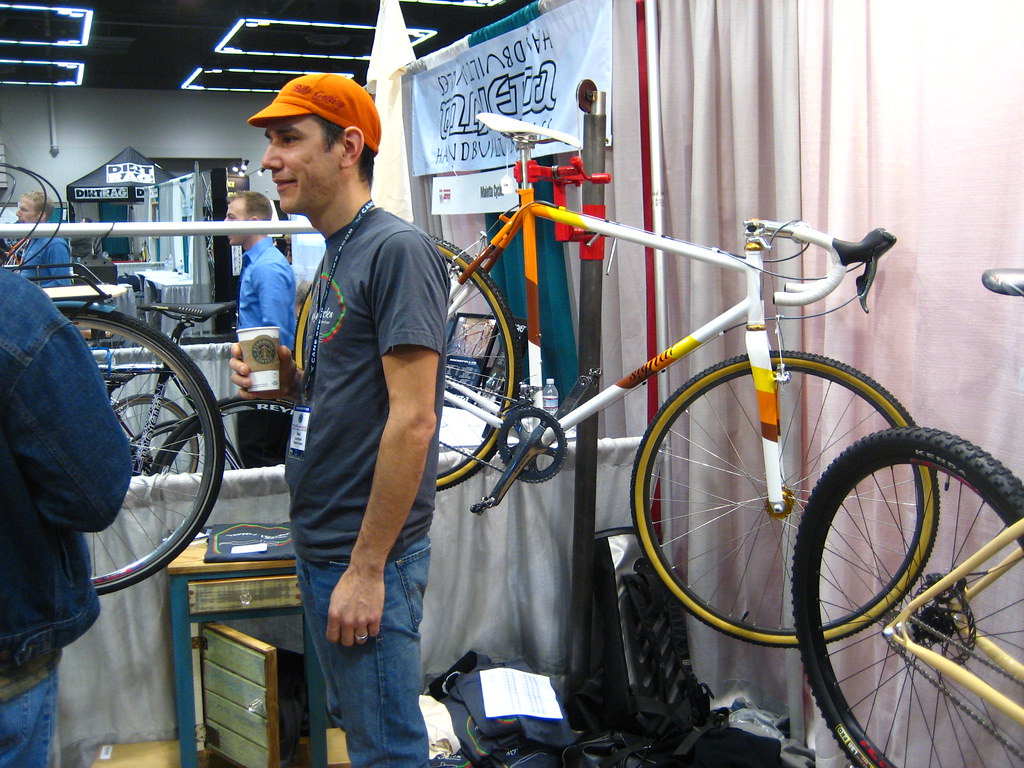
We decided to debut Signal at NAHBS Portland with four bikes: a 29-inch singlespeed mountain bike, a 700c city bike with custom racks, a geared cyclocross bike, and a lugged road bike. We started building in September 2007. The show opened February 8, 2008.
Portland, February 2008
The show drew thousands of people, enough that the Portland Fire Marshal shut the doors for a period in the afternoon. BikePortland covered Signal the day before we opened. Jonathan Maus wrote about our art backgrounds, our bikes, and that Nate and I were “hoping it goes well.”
It went well.
At the show we met a team that were in the process of creating a coffee table book on handmade bicycles. They were including builders like Richard Sachs, Vanilla, Bruce Gordon, Dario Pegoretti, Steve Potts, and Alex Singer, with a foreword written by Phil Liggett (!). When they asked Signal to be a featured builder, I was shocked. We had existed for roughly less than a year.
Lance Armstrong wandered the aisles. So did Robin Williams. We came away with three orders and the beginnings of our little company.
The Early Years
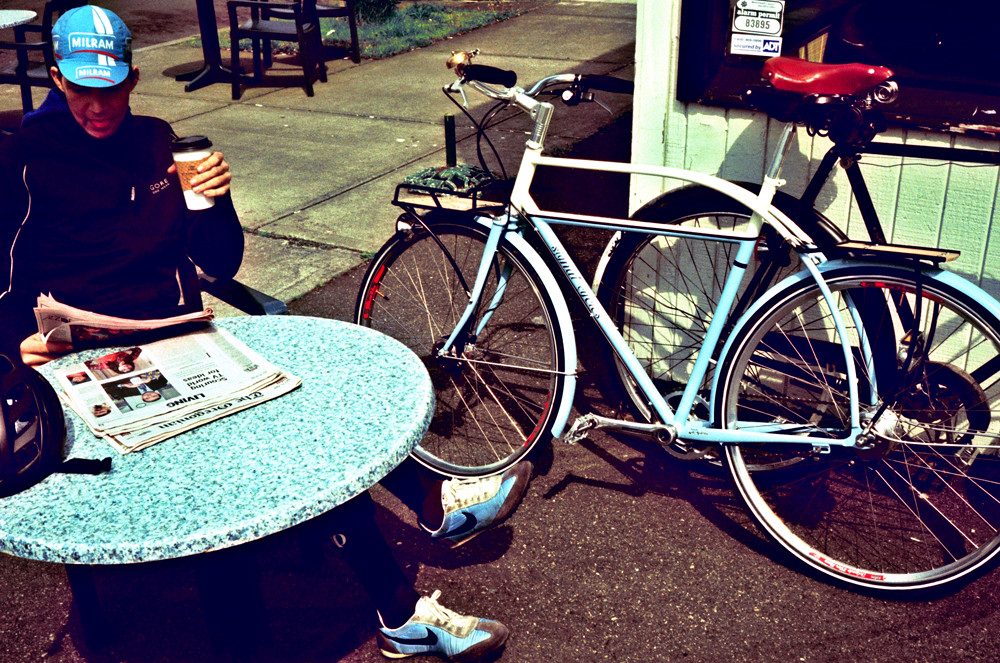
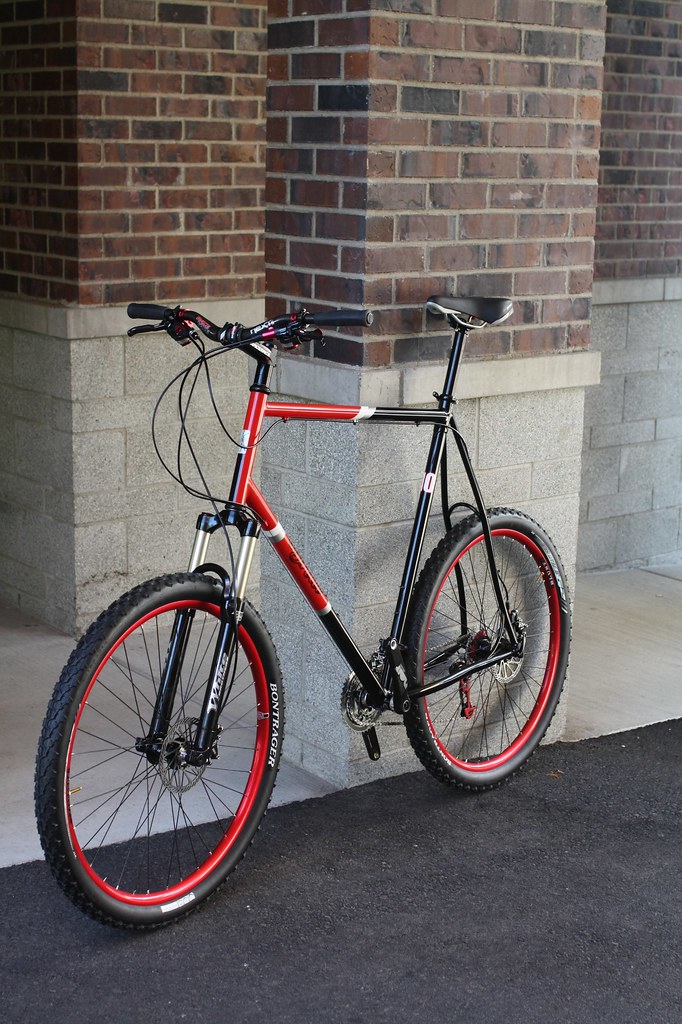
Building out of my garage, Nate and I were slow and deliberate. We wanted to be proud of every bike we put the Signal name on, and that took time. The Bike Gallery arrangement turned out to be more safety net than sales channel. We discovered that our customers wanted to come directly to us and not operate through the Bike Gallery. One of the few bikes that we did sell came with a unique challenge. Our fitter in Lake Oswego shop called to ask if we could build a bike for Joel Przybilla, the seven-foot center for the Portland Trail Blazers. It turns out that being a giant human being makes buying a bicycle that fits a bit difficult.
By our second year the Bike Gallery relationship had run its course. We hadn’t been profitable for them, and we both agreed to a buyout. We were on our own, still working at the shop part time, building bikes in the margins.
We kept going to NAHBS. Indianapolis, then Richmond. The show represented our biggest annual expense but it paid back in coverage. We had magazine features, blog posts, partnership opportunities. More than that, it was where we got to become friends with builders we had admired from a distance. I have a memory of sitting around in a hotel lobby at one of those shows, maybe it was Indy, and looking at the people gathered around the circle and thinking “that’s Mark DiNucci.”
Around that time we had a visit from the industrial design team at Trek that was in town. The small team dropped in to have a look at our space and it was kind of a crazy moment for us. Here we were working in a dirty tiny space, but laboring over projects that were special to us. The team at Trek said how much they would love to be doing that kind of work. I thought how cool it must be to work for a huge company and have a salary. And probably a nice computer and chair to sit in. I suppose each of us were probably just not seeing the green grass on our respective sides of the fence.
Color as Language
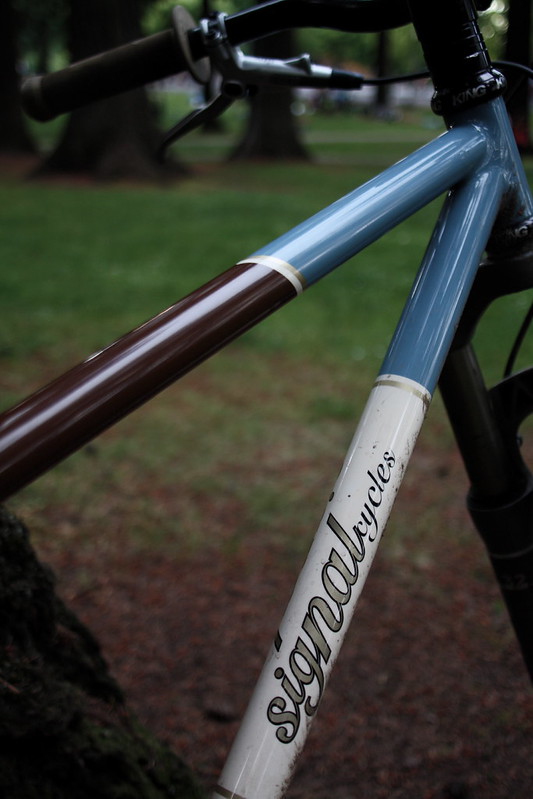
Nate and I were painters before we were builders, and that background showed up most clearly in how we thought about color. Where other builders defaulted to primaries or racier palettes, we leaned into earthy tones with cooler pops. We were inspired by the colors we painted with: ochre, burnt orange, chocolate brown, powder blue, cream. Colors that felt more classic to us, less like sporting goods.
That attention extended to everything. We’d regularly spend time on details that most customers would likely never notice. No one was paying us for those hours. We did it anyway.
The Cyclocross Team
Portland’s cyclocross scene in those years was electric, and Signal was part of it. We started a grassroots team by approaching Chris King and AlphaQ for donated parts, and then batch-built frames to get riders on Signal bikes quickly. We had fast men and women racing for us every weekend for about three seasons.
The team wound down when the cross scene started feeling oversaturated, and also when Nate and I had dad duties that made the weekends look different. But seeing Marila, Pete, Carey, Dave and eventually Shannon on our bikes felt great.
Austin, 2011
NAHBS that year was in Austin, Texas. I convinced a group of Oregon builders, Ira Ryan, Sean from Vertigo, the Vanilla crew, to share a large Airbnb near the convention center. It seemed like a good idea. The building turned out to be directly above one of the bars on 6th Street, which is Austin’s famous strip of linked music venues. I say famous, but somehow I hadn’t gotten the word. We tried to sleep knowing the next few days would be demanding. The music ran until 2am. Then the voices on the street for another hour. Then the glass recycling trucks.
My friends were not pleased with me.
Signal won our only NAHBS trophy that weekend. Best City Bike, for a stainless steel lugged singlespeed town cruiser we built for a customer named Mark. He told us what he wanted, a bike to ride around Portland while visiting his daughter, and trusted us to make it special. We went stainless for the lugs, paired it with a nickel-plated brushed stem we built ourselves, and let the silver and chrome components tie the whole thing together. The judges were impressed, but more importantly, Mark loved it.
Page Street
That same year we moved out of the garage and into a space on North Page Street. Our neighbors were Metropolis Bike Shop, frame builder Joseph Ahearne, Mitch Pryor of MAP Cycles, and Greg Hudson of Corsa Concepts. A tight little community of bike people sharing walls.
This was Signal’s high water mark. We were building full time. We had connected with a Japanese shop owner at NAHBS and were selling bikes through him. Signal frames had gone to China, Jakarta, several European countries, and across the US. We were approached by Anthropologie to build a made-in-America city bike for their retail stores. We tried hard to make the numbers work. A step-through steel frame with a custom front rack housing a fully equipped wicker picnic basket, retailing at $6,000. The margins were nearly nothing for us and the price was still too high for Anthropologie’s customers. The stores eventually had to slash prices to move them.
It was becoming clear that building one-of-a-kind objects was not a path to financial stability. Every frame was a custom setup. No efficiencies, no batch processes, no leverage. We launched a production line, the Signal Saltzman, a fender-ready sporty road bike suited to the Pacific Northwest. Our second production bike, the Signal Pulse won a Bicycling magazine Editor’s Choice award. We sold some. Not enough to change the underlying math.
The financial reality was part of our conversations almost every day.
Ziba and Oregon Manifest
In February 2011, shortly before we moved to Page Street, a small team of industrial designers from Portland’s Ziba Design came to visit. Ziba had been invited to participate in Oregon Manifest, a design competition built around the question “What is the ultimate city bike?” Each entry had to survive a 50-mile field test demonstrating real-world cargo capacity. Ziba was interviewing three builders and chose Signal as their fabrication partner.
The next six months were an intensive education. Ziba showed us how industrial designers worked, how they uncovered user needs, built insights from research, and translated those insights into designed solutions. Our job was to fabricate the bike and to evaluate whether their ideas were buildable and to push back when they weren’t. The whole process was documented in monthly posts on the industrial design website Core77.
Our bike was a twin top-tube step-through frame with a wraparound headtube, an homage to the Redline RL 20ii, a freestyle BMX bike I’d obsessed over as a teenager. It was unlike anything we had built before.
Working with Ziba planted something in me. I started thinking seriously about industrial design as a career path. That thought would eventually change everything.
The End
In 2013 after 13 years in Portland, I made the decision to move to Savannah, Georgia to pursue a master’s degree in industrial design. Nate understood. We had many conversations about the future of signal and our growing families. I know that a lot of people find that business partnerships are toxic to friendships, but I am so grateful that I met Nate and that we got to spend all those years working together on our company. Somehow we were able to understand and appreciate our differences as strength. There were many times when I was down and Nate helped pick my back up, and I believe I did the same for him.
He kept building solo after I left. Over time the joy for it faded. He had two more kids by then, his wife was working full time, and the bandwidth just wasn’t there. He stopped taking new orders, finished the bikes he had promised, and closed the shop. Signal’s last frame shipped in the spring of 2018.
We were both proud of what we had built. We were both sad that we couldn’t make it into the company we had imagined.
What It Was
Signal got one thing right and one thing wrong, and they were the same thing. We were relentless about what we put the Signal name on. The bikes were our calling card and we treated every detail, visible or not, as if it mattered. That standard built the reputation. It also made the business nearly impossible to run. We spent too much time on details, and no one was paying us for those hours.
We knew that. We did it anyway.
That’s probably the most honest summary of Signal Cycles I can offer: two painters who loved bikes, who cared more about the work than the margins, who built something beautiful for about a decade and then, quietly, let it go.
Comments